
In a previous article, I introduced learning content about diagonals:
In that article, I recommended naming frequently-used diagonals and recognizing them as patterns. Here, I'll list some concrete examples.
Queen's Fianchetto Diagonal
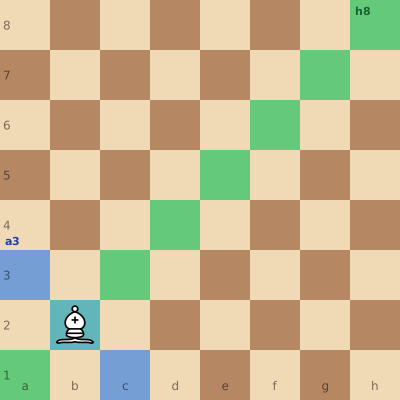
For White, placing a bishop on b2 controls the a1–h8 and a3–c1 diagonals.
For Black, placing a bishop on b7 controls the a8–h1 and a6–c8 diagonals.
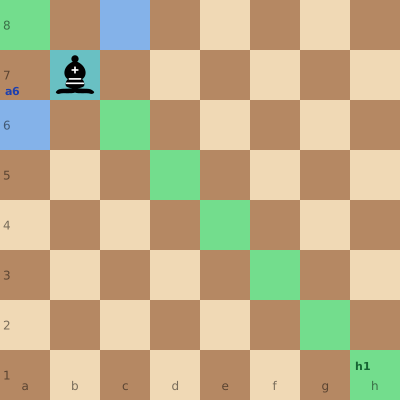
For White, this setup appears in the Nimzo-Larsen Attack. For Black, it appears in the Queen's Indian Defense.
King's Fianchetto Diagonal
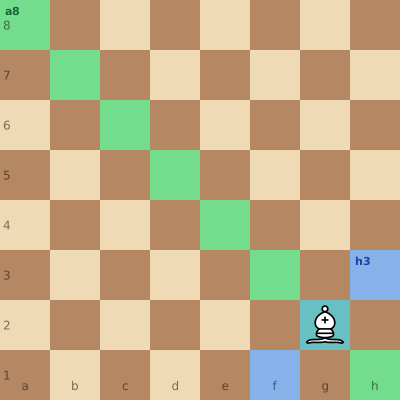
For White, placing a bishop on g2 controls the a8–h1 and f1–h3 diagonals.
For Black, placing a bishop on g7 controls the a1–h8 and f8–h6 diagonals.
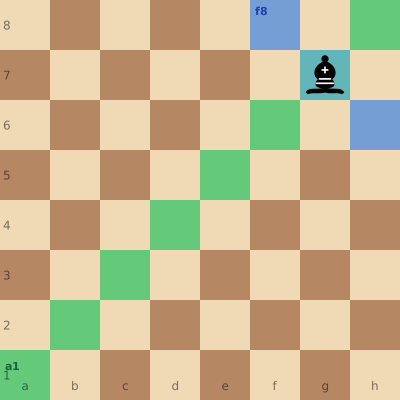
For White, this occurs in the King's Indian Attack. For Black, it appears in the King's Indian Defense and the Modern Defense.
The fianchetto is commonly encountered in modern-style openings, so you'll naturally internalize it over time. Using symmetry is also an efficient way to memorize these patterns:
Italian Diagonal
This is the diagonal controlled by Bc4 in the Italian Game, covering a2–g8 and a6–f1.
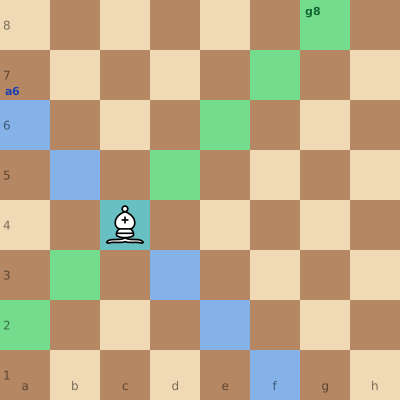
London Diagonal
This is the diagonal controlled by Bf4 in the London System, covering c1–h6 and b8–h2.
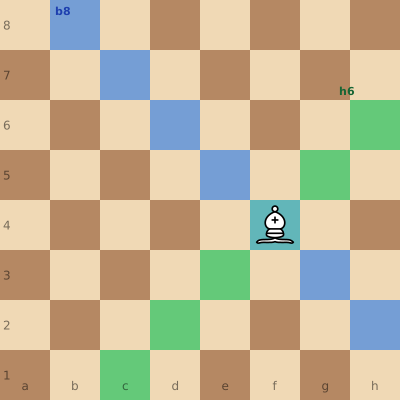
The London System is a popular opening just like the Italian Game. Note that the bishop placement is mirror-symmetric to the Italian, so you can use that symmetry as a memory aid.
Spanish Diagonal
This is the diagonal controlled by Bb5 in the Ruy López, covering a4–e8 and a6–f1.
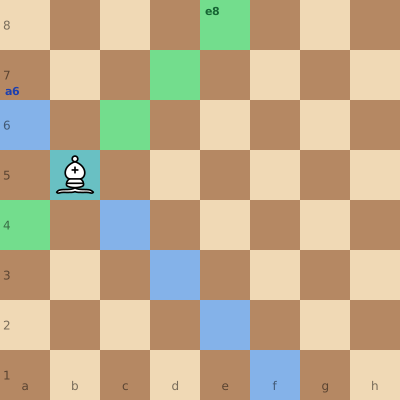
A notable feature of this diagonal is the potential check against the king in its starting position and the absolute pin of Nc6 when that knight is present. This bishop placement also appears in many other openings, so it's well worth memorizing.
Nimzo-Indian Diagonal
This is the diagonal controlled by Bb4 in the Nimzo-Indian Defense, covering a3–f8 and a5–e1.
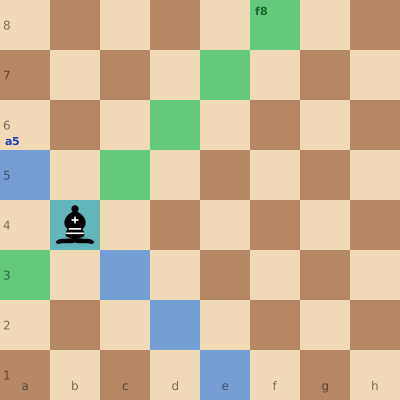
While not the most frequently encountered opening, the Nimzo-Indian is an extremely powerful way for Black to fight for the initiative against 1.d4. Its diagonals are vertically symmetric with the Spanish Diagonal, making them easy to learn together.
Others
Scholar's Mate Diagonal
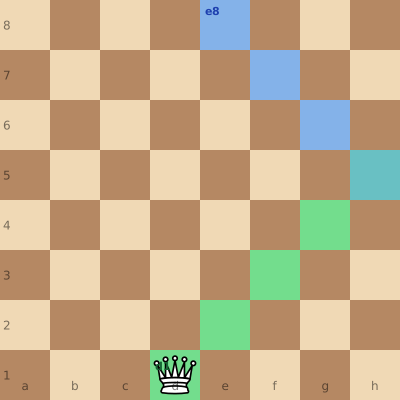
d1–h5 / e8–h5
Recognizing this as the pattern where the queen checks the king from its starting square is very useful to know.
Fool's Mate Diagonal
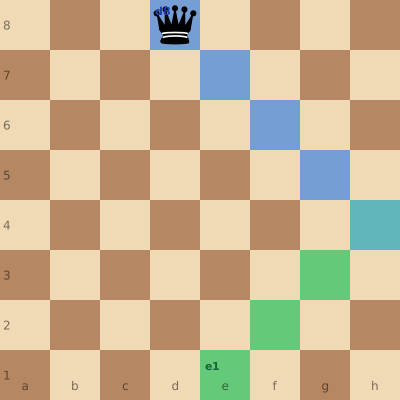
e1–h4 / d8–h4
This is vertically symmetric with the Scholar's Mate Diagonal and shares the same attacking characteristics against the king, making it easy to memorize alongside it.
This list reflects my own personal preferences, but there are certainly many more interesting diagonals to discover. Try finding the diagonal patterns that work best for you and use them to strengthen your blindfold chess practice.